

Notesstandard
Would you want to live on Gliese 581C?
The recent discovery of a terrestrial like planet (i.e., one which is stony and not gaseous like Jupiter) gave rise to a minor media hype, with statements like "We may be witnessing the start of a cosmic real estate boom" being commonplace. However, is Gliese 581C really a place…
The recent discovery of a terrestrial like planet (i.e., one which is stony and not gaseous like Jupiter) gave rise to a minor media hype, with statements like “We may be witnessing the start of a cosmic real estate boom” (e.g., here) being commonplace. However, is Gliese 581C a place you would like to call home at any point in the future?
The planet, which is likely to have a mass five times larger than our own’s, will have a surface gravity which is about 51/3~1.7 times larger (assuming a similar density). That is, you’ll be awfully tired. During my military service, I once flew on a mission where the plane would perform a U-turn every 15 minutes or so. After a few turns, I realized that there is no point trying to keep on standing at the higher effective gravity. I cannot imagine spending 24hrs a day at this gravity.
In fact, talking about days, there are probably none on Gliese 581C. Why? Because Gliese 581 is very close to its parent star. This implies that the tidal interaction is very large. Typically, it scales like the mass of the main object and the distance to it, to the 3rd power. This implies a few things:
- If the planet did not tidally lock, one would expect very high tides. Since the tidal forces are typically 0.3*143~800 times larger, instead of the few decimeter-high tides experienced in the Earth's oceans, Gliese would typically have 100 meter tides. This would dwarf the 16m tides at the bay of fundy!
- The large tidal interaction would actually slow down the spin of the planet on a time scale way shorter than on Earth. Since this time scale typically scales as the tidal forces squared, the slowing down rate would typically be a million times shorter. i.e, VERY FAST. That is, as soon as the oceans formed (optimistically assuming Gliese 581 did form oceans like those on Earth), Gliese 581C stood still (well, tidally locked to its orbit).
- Of course, if Gliese did not form Oceans, and its surface is rock solid, the tides would be much smaller. This would allow it to be free of tidal locking for much longer, but the lack of Oceans would imply that it cannot have any romanic beaches to brag about.

A tidally locked planet implies that at any given location, the main star always appears at the same point in the sky, which is how you would see Earth if you happened to be on the Moon. The difference is in the size. The star would appear about 7 times larger than the sun appears to us, or twice as a large as Earth appears from the moon.
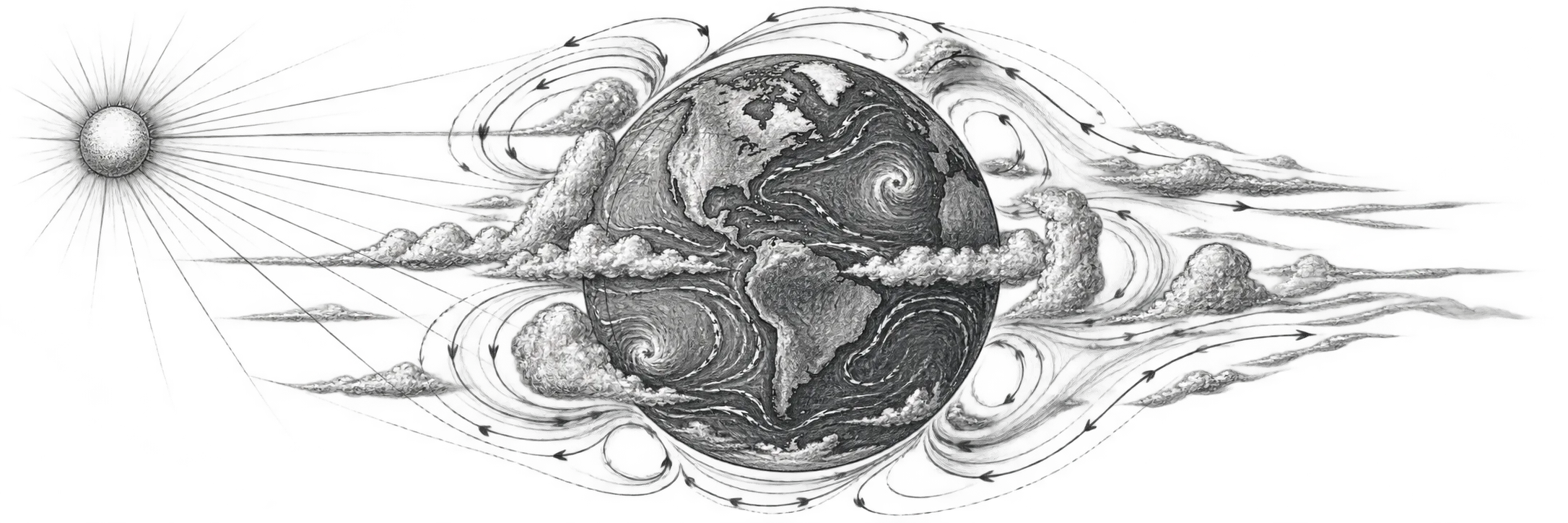
Because of the tidal locking, the star pointing point would be very hot, the equators cool, and the permanently dark side very cold! Unlike Earth, which has the Hadley circulation advect energy polewards up to 30°, and beyond that with cyclones, tidally locked Gliese 581 could have convective cells which extend the whole sun facing side and beyond, but no cyclonic activity.
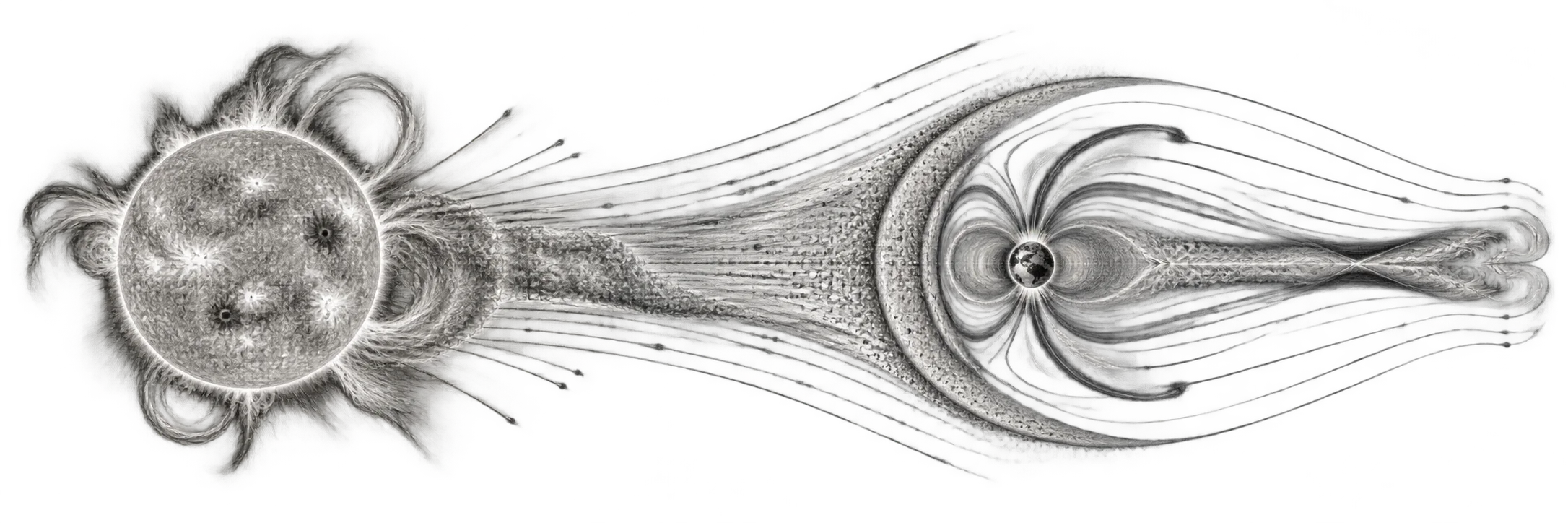
The large apparent diameter of the star would allow you to clearly see the real problem with living close to an M-dwarf star. You could easily see the HUGE flares the such stars exhibit - many times larger than those of the sun.
Their origin lays in the fact that while only 2% of the sun’s mass is transporting energy through convection (e.g., the movement seen in a heated pot of water or soup), most of the mass in M-dwarfs is transporting energy convectively. Since the convective layer is responsible for the generation of the solar magnetic field and the non-thermal solar activity (UV, X-rays, sunspots, magnetic fields, solar wind and of course solar flares), all these effects would be way larger in Gliese’s M-dwarf star. Thus, large flares, which are orders of magnitude larger than those seen on the Sun would likey be very harmful to us, if we ever tried to settle on Gliese 581 C. (But not necessarily to the ocean dwelling beings which did form there ;-) )
The last point to note is that after a while, the fact that everything appears deep red would really annoy any sane person…
There is no place like the planet we call home. Well, at least Gliese 581C is no competition.