



Notesstandard
Reynolds Number
Reynolds number is a dimensionless number which determines whether a given flow will be laminar or turbulent. It is basically the ratio between the inertial forces and the viscous forces . It is given by: where $ $ is the density of the…
Reynolds number is a dimensionless number which determines whether a given flow will be laminar or turbulent. It is basically the ratio between the inertial forces and the viscous forces . It is given by:
where is the density of the fluid (or gas), & are the typical velocity of the flow and the size of the system (e.g., the diameter of a pipe), while and are the dynamic and kinematic viscosities.
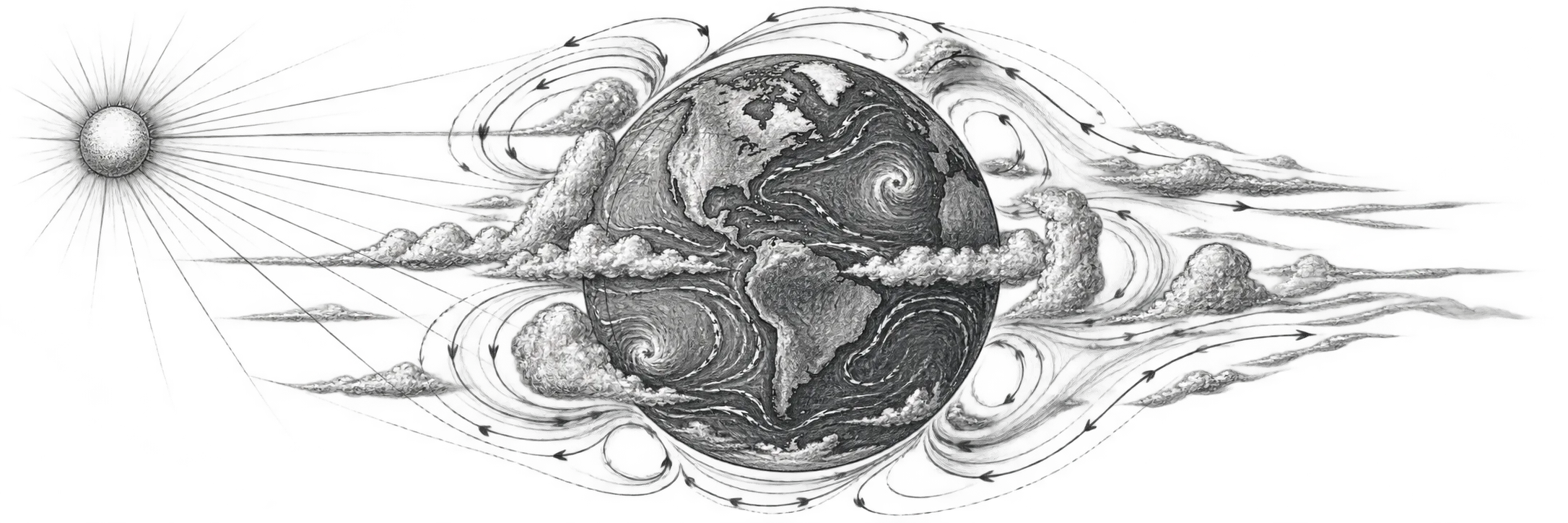
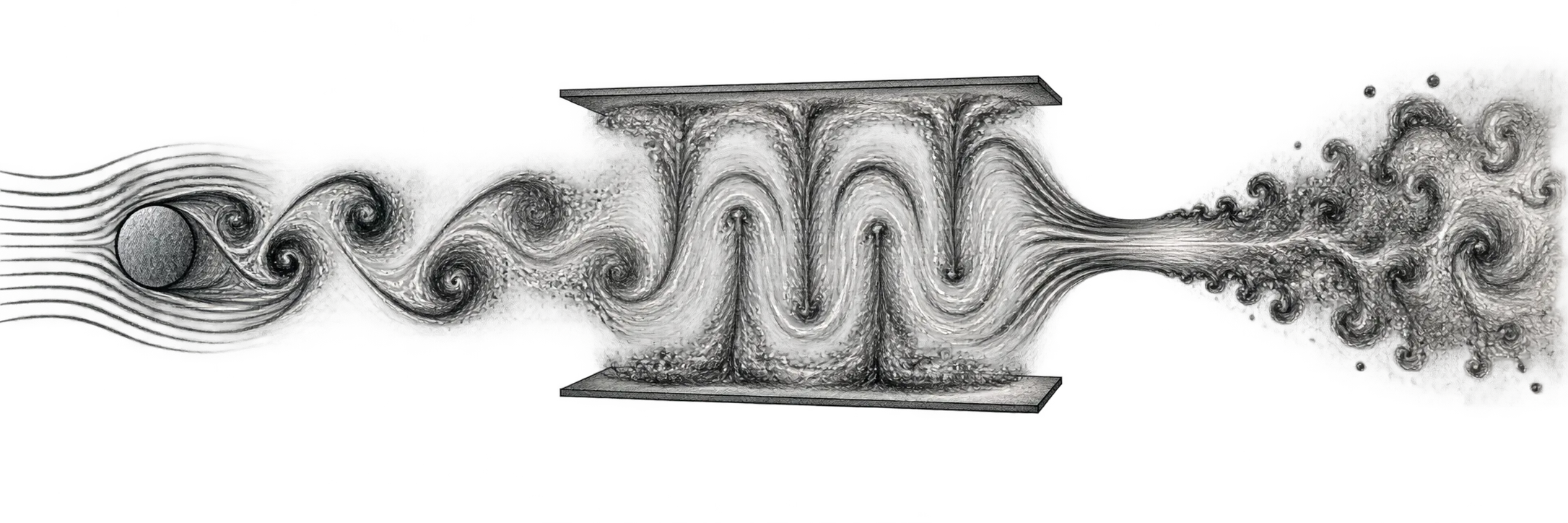
Typically, the transition between laminar and turbulent flows takes place at Reynolds of a few thousand. That is, at Re of a few hundred or less, the flow is laminar, or nearly laminar. At Reynolds of 103-104, the flow will not be fully turbulent, and will display interesting structure, such as the sheding of vortices as is illustrated by the banner picture (which are von Karman vortices downstream of an island). Only at higher Raynolds, of typically 104-105 does well developed turbulence arise.